 Cgpt
Cgpt
Cgpt supports access to Solidity generation and smart contract auditing
Cgpt, ChainGPT’s utility token, can fund credits for its Solidity generator and auditor. Generation starts with written requirements and produces source code. Auditing starts with code and produces findings about potential vulnerabilities, logic errors and inefficient gas use. Generated code needs compilation, tests and security review before deployment.
UpdatedA contract description expresses intended behavior, while source code defines what the blockchain executes. Confusing those layers can hide missing permissions or incompatible imports. The choice between generation and auditing begins with the material already available.
Describe permissions before generating Solidity code
When the intended behavior is clear, the Smart Contract Generator can turn a written specification into editable Solidity source. Describe the functions, who may call them and any state changes they should make. Include the conditions under which calls must fail. Permissions deserve explicit wording because unrestricted access to a sensitive function can undermine the intended design.
ChainGPT also provides explanations of generated contracts, helping readers locate functions and understand their relationships. Review the source alongside its explanation: readable prose cannot establish whether the implementation enforces every restriction. The generation workflow includes compilation and deployment on supported networks. Compilation translates source into executable bytecode; deployment publishes a contract to a selected network. A generated draft remains editable, so necessary corrections can happen before deployment. Tests should examine both allowed operations and calls the specification says must fail.
What does ChainGPT examine when auditing Solidity code?
An existing Solidity contract gives the Smart Contract Auditor concrete functions and state transitions to examine for potential security and logic problems. It also assesses gas inefficiencies and relevant standards issues. Findings need the submitted code’s context, especially where libraries or other contracts affect execution.
Permissions and external calls
Control over state changes
Access-control findings concern which callers can perform sensitive operations and whether the code enforces those restrictions. A function may compile correctly while granting wider authority than intended. Meaningful assessment therefore needs both the implementation and its expected permission model. Legitimate administrative powers also deserve review because they determine how much control a privileged account retains.
Reentrant execution
Reentrancy can occur when an external call allows another contract to call back before the original operation finishes. The order of state updates can then affect whether an operation repeats against outdated information. Exploitability depends on the reachable calls and protections in the code. An auditor’s warning needs examination in that specific execution context.
Findings need reproducible context
The report identifies candidate issues in the supplied contract, including logic concerns and possible gas improvements. Confirm a finding against the affected function and its dependencies before applying a proposed fix. A gas-saving change also needs behavioral review: reducing execution work helps only when the intended checks and state changes remain intact.
Compiler versions and imports govern compatibility
A generated file can compile only when its compiler constraints, imports and target settings fit the chosen build environment. The source file’s version pragma specifies acceptable compiler versions. Every imported file has its own constraints, so reviewing only the main contract can miss an incompatible dependency elsewhere in the project.
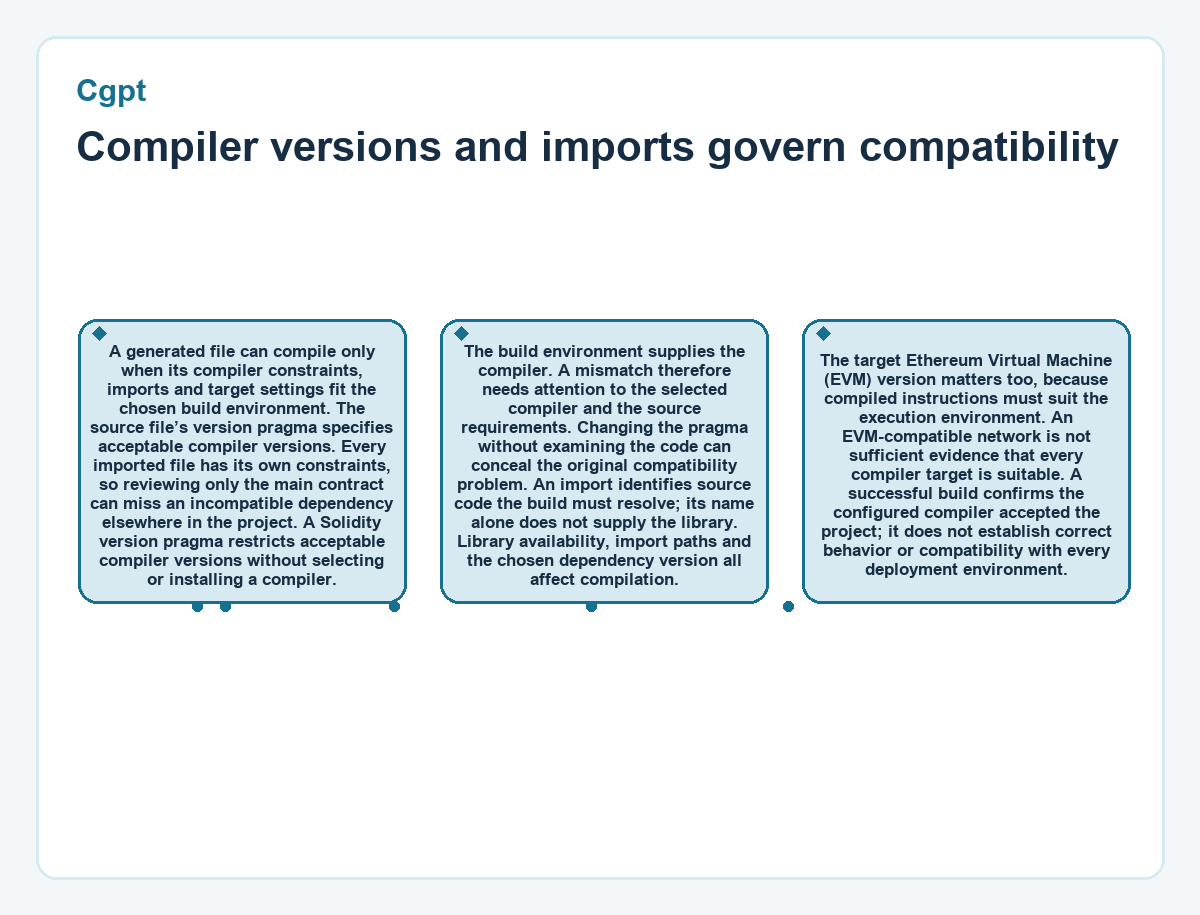
A Solidity version pragma restricts acceptable compiler versions without selecting or installing a compiler. The build environment supplies the compiler. A mismatch therefore needs attention to the selected compiler and the source requirements. Changing the pragma without examining the code can conceal the original compatibility problem.
An import identifies source code the build must resolve; its name alone does not supply the library.
Library availability, import paths and the chosen dependency version all affect compilation. The target Ethereum Virtual Machine (EVM) version matters too, because compiled instructions must suit the execution environment. An EVM-compatible network is not sufficient evidence that every compiler target is suitable. A successful build confirms the configured compiler accepted the project; it does not establish correct behavior or compatibility with every deployment environment.
AI usage charges and deployment gas are separate
ChainGPT meters paid AI usage in credits, while deploying a Solidity contract involves blockchain execution costs on the selected network. CGPTc is the credit unit used by the platform. Credits can be purchased directly or obtained by converting the token, so token ownership is one funding route. Converting CGPT into CGPTc is final; the credits cannot be converted back into CGPT. Staking benefits concern account access and membership; they do not establish whether a particular contract is secure.
The selected tool, applicable plan and number of charged requests affect AI usage cost. A code-generation charge is not a deployment gas estimate. Deployment cost also reflects the compiled contract and the network’s transaction fee conditions. Keep those expenses distinct when comparing an additional AI revision with changes made in an existing build environment.
A missing dependency changes the repair choice
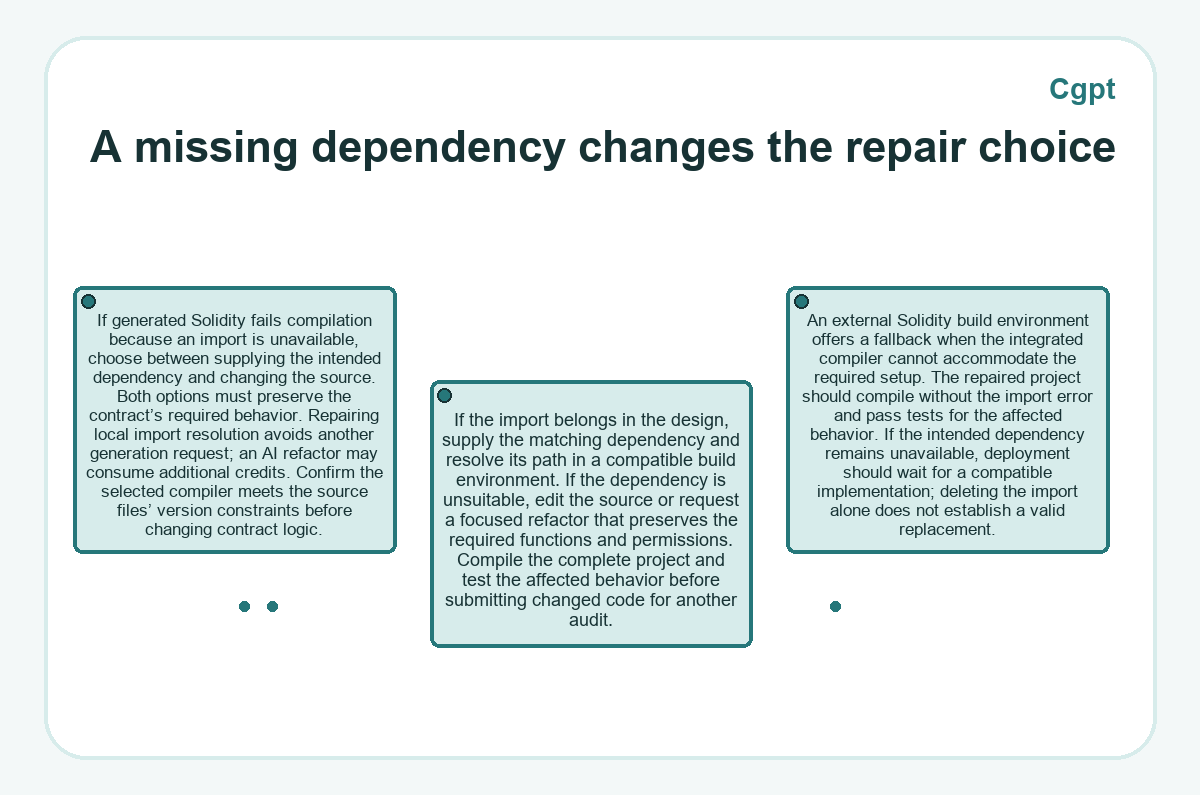
If generated Solidity fails compilation because an import is unavailable, choose between supplying the intended dependency and changing the source. Both options must preserve the contract’s required behavior. Repairing local import resolution avoids another generation request; an AI refactor may consume additional credits.
- Confirm the selected compiler meets the source files’ version constraints before changing contract logic.
- If the import belongs in the design, supply the matching dependency and resolve its path in a compatible build environment.
- If the dependency is unsuitable, edit the source or request a focused refactor that preserves the required functions and permissions.
- Compile the complete project and test the affected behavior before submitting changed code for another audit.
An external Solidity build environment offers a fallback when the integrated compiler cannot accommodate the required setup. The repaired project should compile without the import error and pass tests for the affected behavior. If the intended dependency remains unavailable, deployment should wait for a compatible implementation; deleting the import alone does not establish a valid replacement.
Security review applies to the exact release code
A release involving real assets needs security review of the intended implementation, including relevant dependencies and deployment configuration. An AI audit contributes findings to that review. Testing examines behavior through selected inputs, while specialist review can examine assumptions and interactions beyond the model’s report. Neither an empty findings list nor successful compilation covers every possible execution path.
Preserve the reviewed source and build settings with the report so its scope remains identifiable. Source-code verification can establish a match between published source and deployed bytecode; that match answers a different question from vulnerability assessment.
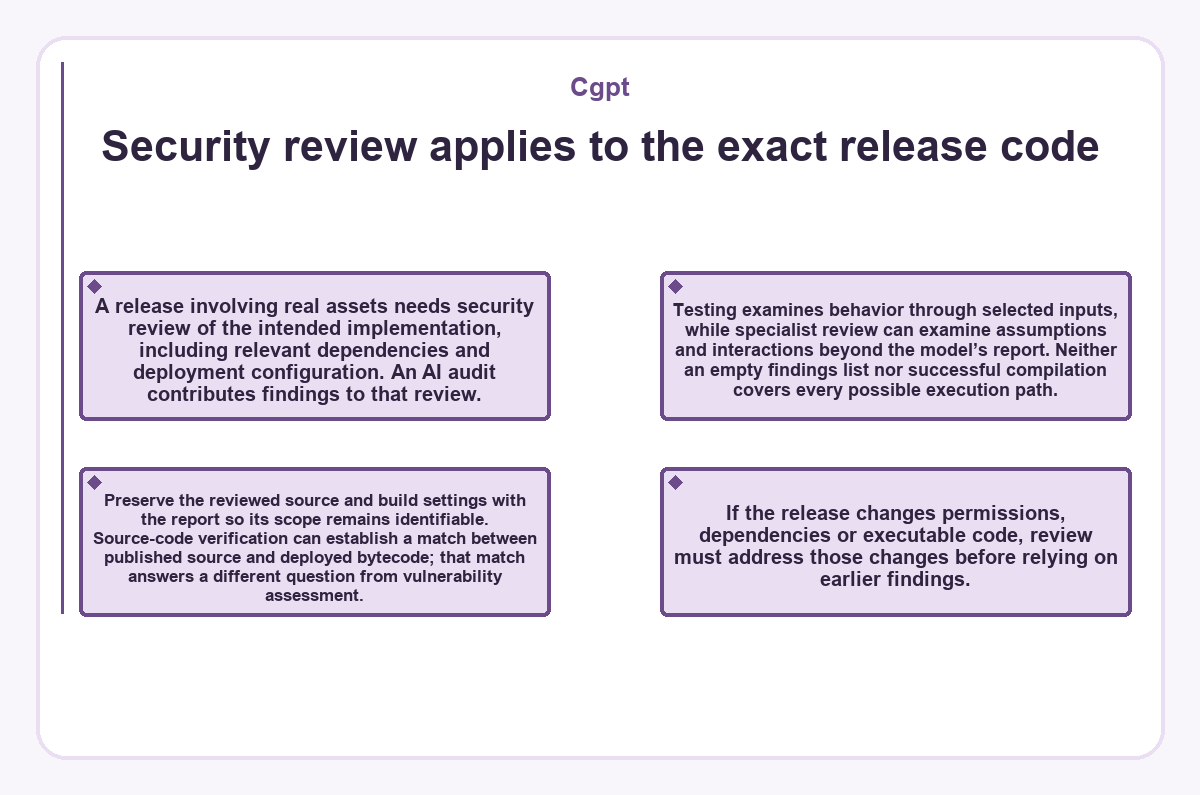
If the release changes permissions, dependencies or executable code, review must address those changes before relying on earlier findings.
Popular questions about Cgpt
-
Is a Node.js SDK required to automate Solidity audits?
- The Smart Contract Auditor supports direct HTTP requests without requiring its Node.js SDK. The API accepts Solidity code and audit questions, then returns generated analysis. The SDK supplies a convenient integration layer for compatible applications; choosing direct API access changes how the application communicates with the service, not the submitted contract’s review requirements.
-
Does changing an audit submission update a deployed contract?
- Editing source submitted for an audit does not change an already deployed contract. Applying a fix to a live system requires a supported upgrade mechanism or a new deployment, depending on its design. Upgrade authority and any migration requirements need separate consideration; an amended audit report does not carry out those changes.
-
Should an audit prompt contain wallet keys or seed phrases?
- Wallet private keys and seed phrases do not belong in a smart contract audit prompt. The auditor needs relevant source code and context, not secrets used to authorize wallet transactions. Submitting code sends it to the service, so remove credentials from accompanying configuration and include only material you are authorized to share.
-
Why can a generator API request fail before returning Solidity code?
- A generation API request can fail because authentication fails, credits are insufficient, request limits are exceeded or the service cannot be reached. Such errors concern access or delivery and do not themselves diagnose a Solidity defect. The API error response or client-side error helps distinguish account restrictions from connectivity problems without treating either as a contract compilation failure.
-
Can ChainGPT generate multiple Solidity contracts from one prompt?
- ChainGPT’s generator can produce multiple contracts from a single prompt when the requested design requires them. Their interfaces and permissions need review alongside each file’s code. Cross-contract behavior matters even when individual files compile, so compilation and testing should cover the related contracts together with their required dependencies.